This webpage is exclusively for selected customers and should not be shared with others.
Demo dataThe MMM Studio offers a readily available set of demo data that can be used for a quick marketing mix modeling experience. Navigate to [Model Configuration], click Create a new model, and select Data Hub (demo) as data hub.
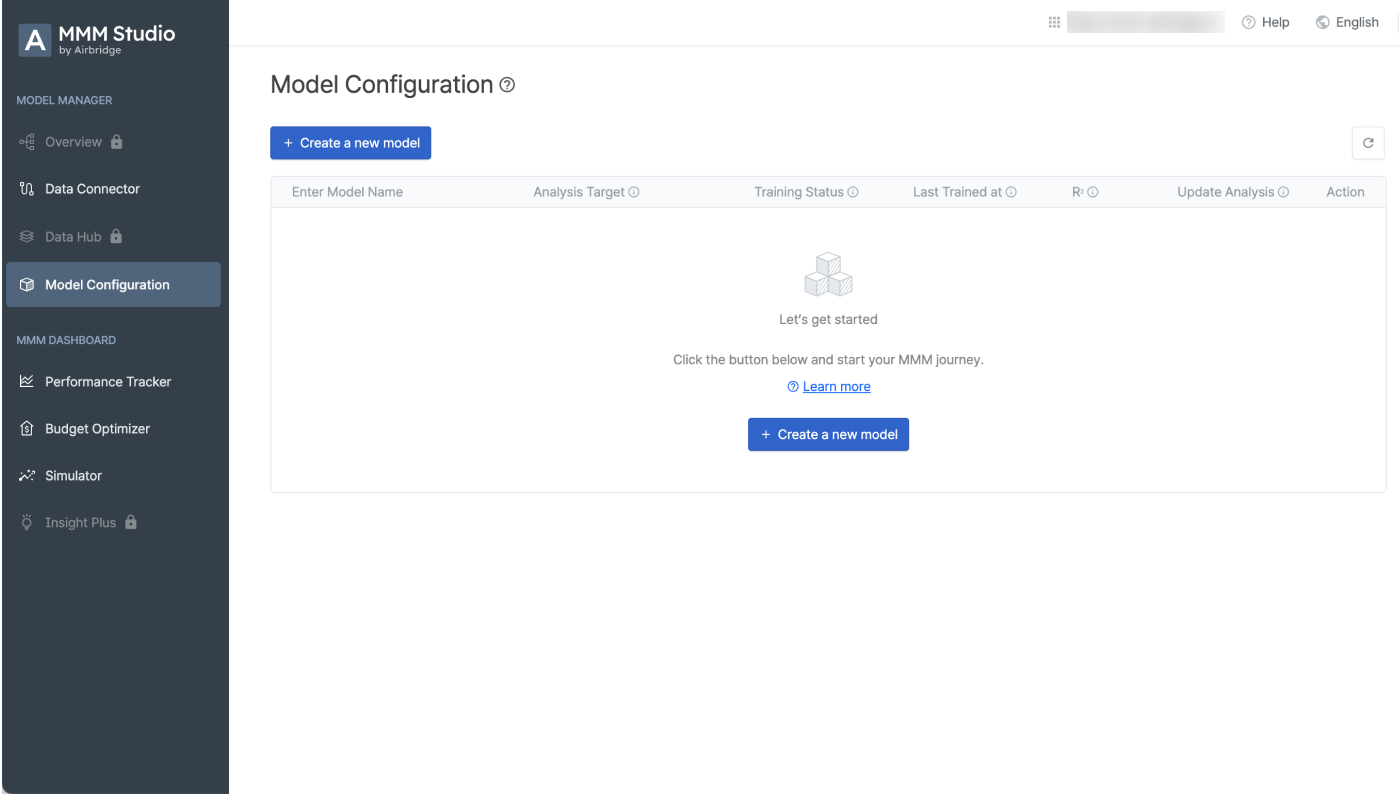
Creating Marketing Mix Models
Have you prepared your data?The first step of marketing mix modeling is data preparation. Make sure you prepare your data in the required file format and store it in the data hub on the [Data Connector] page. For more details, refer to this article.If you don’t have the data at hand and want to try out the modeling, click Create a new model and select Data Hub (demo) as the data hub to use the demo data for modeling.
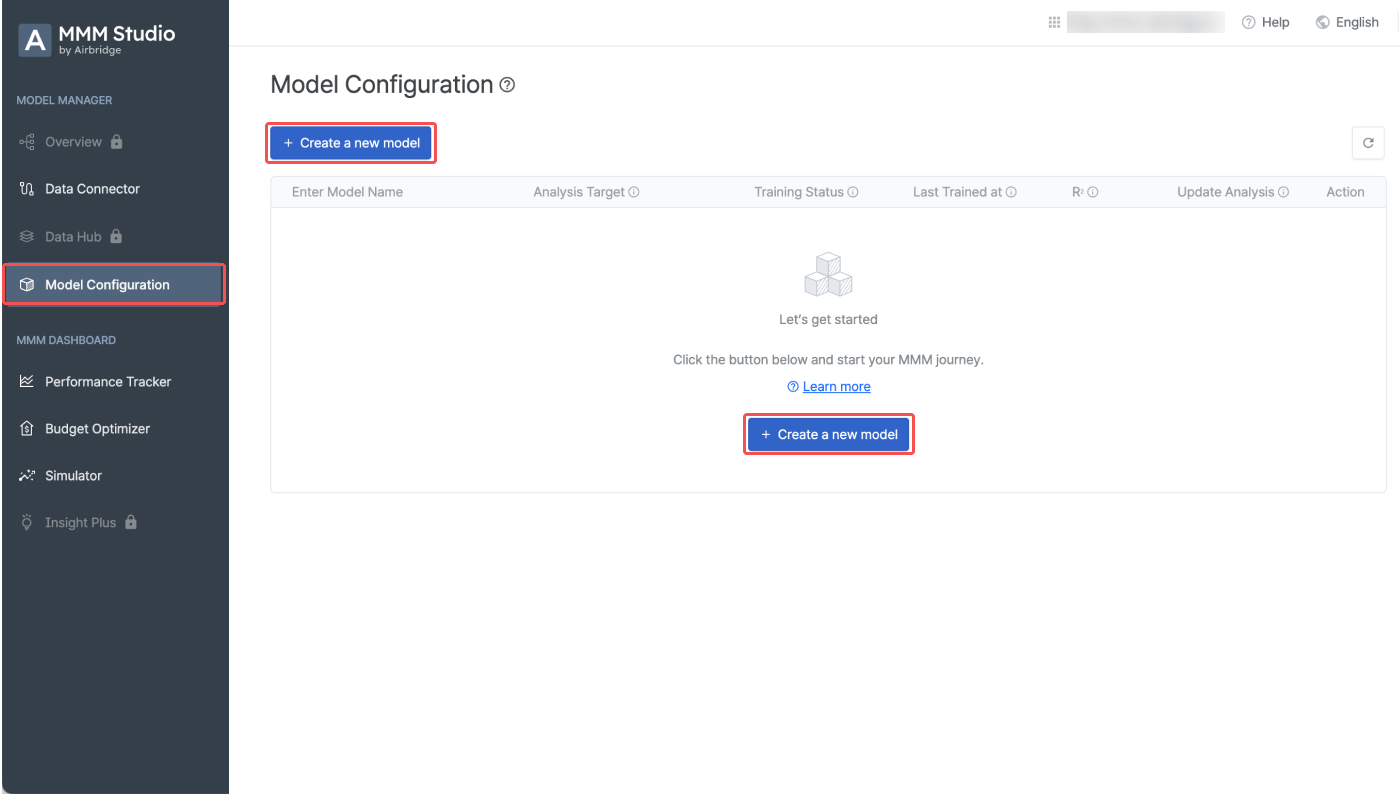
- Select [Model Configuration] from the left menu bar and click Create a new model.
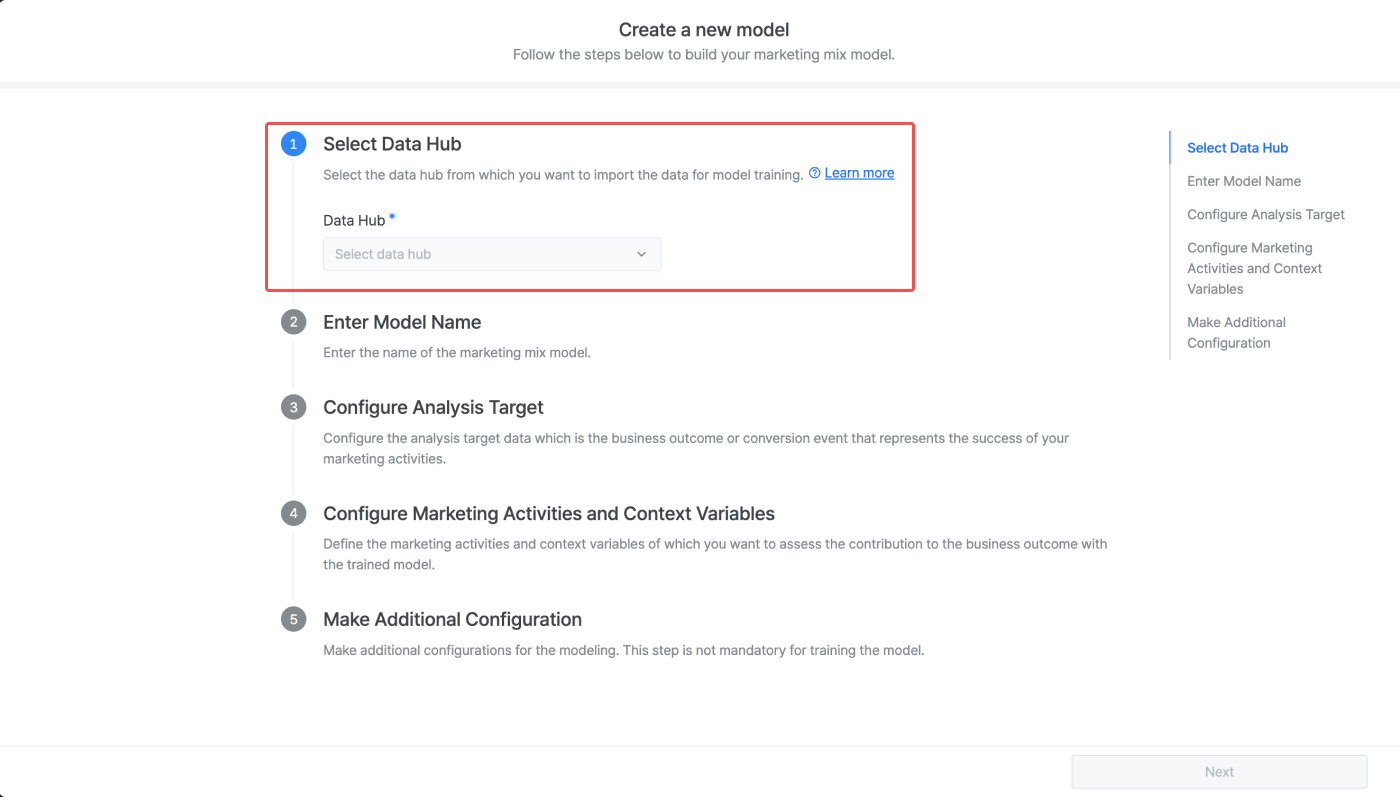
- Select the data hub from which you want to use the data for marketing mix modeling.
Data sets required for marketing mix modeling
Data sets required for marketing mix modeling
The following data sets must be prepared to perform marketing mix modeling.
- Enter the model name. The model name has to be unique.
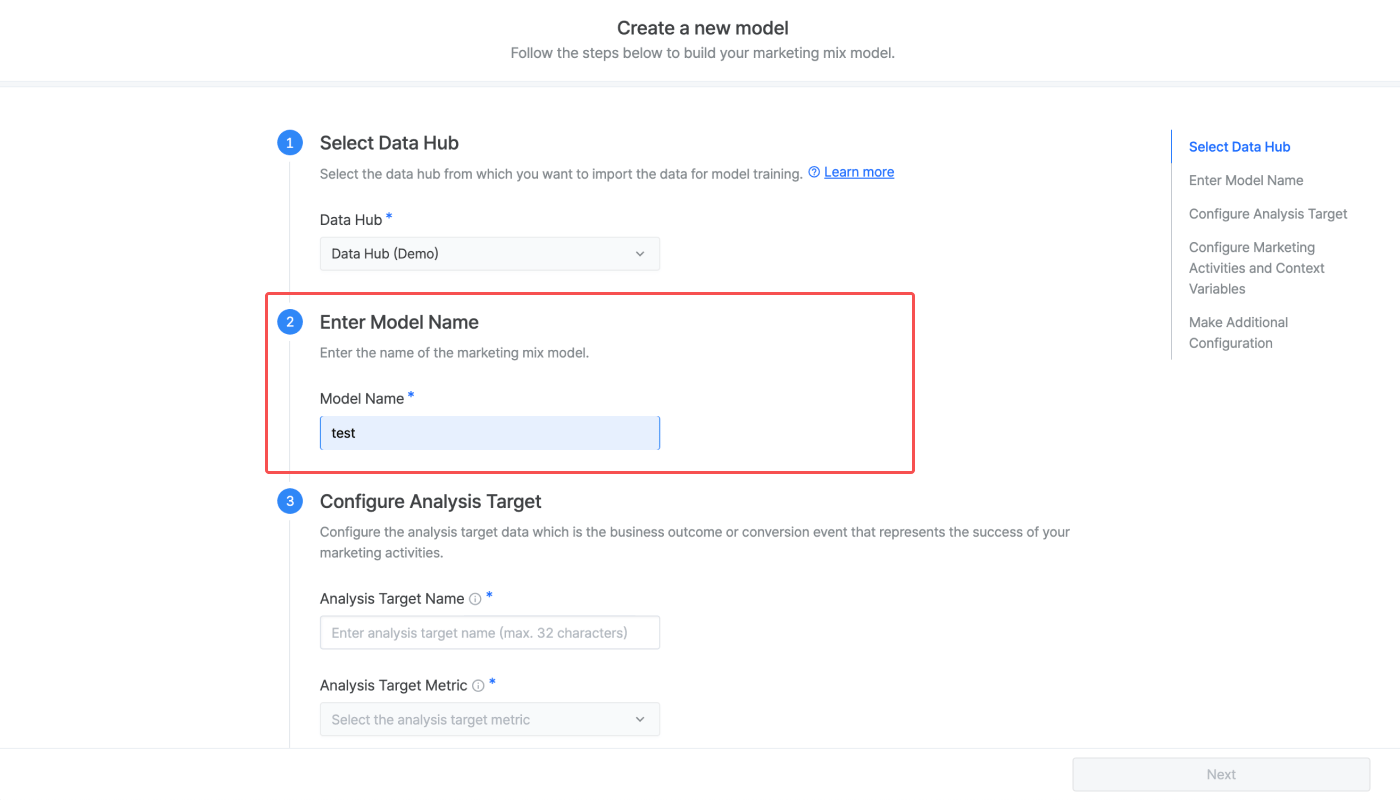
- Enter the analysis target name. The name must be less than 32 characters. Then, select the analysis target metric from the metrics saved in your selected data hub. Click Add a filter to specify the metric. Multiple filters and filter values can be added.
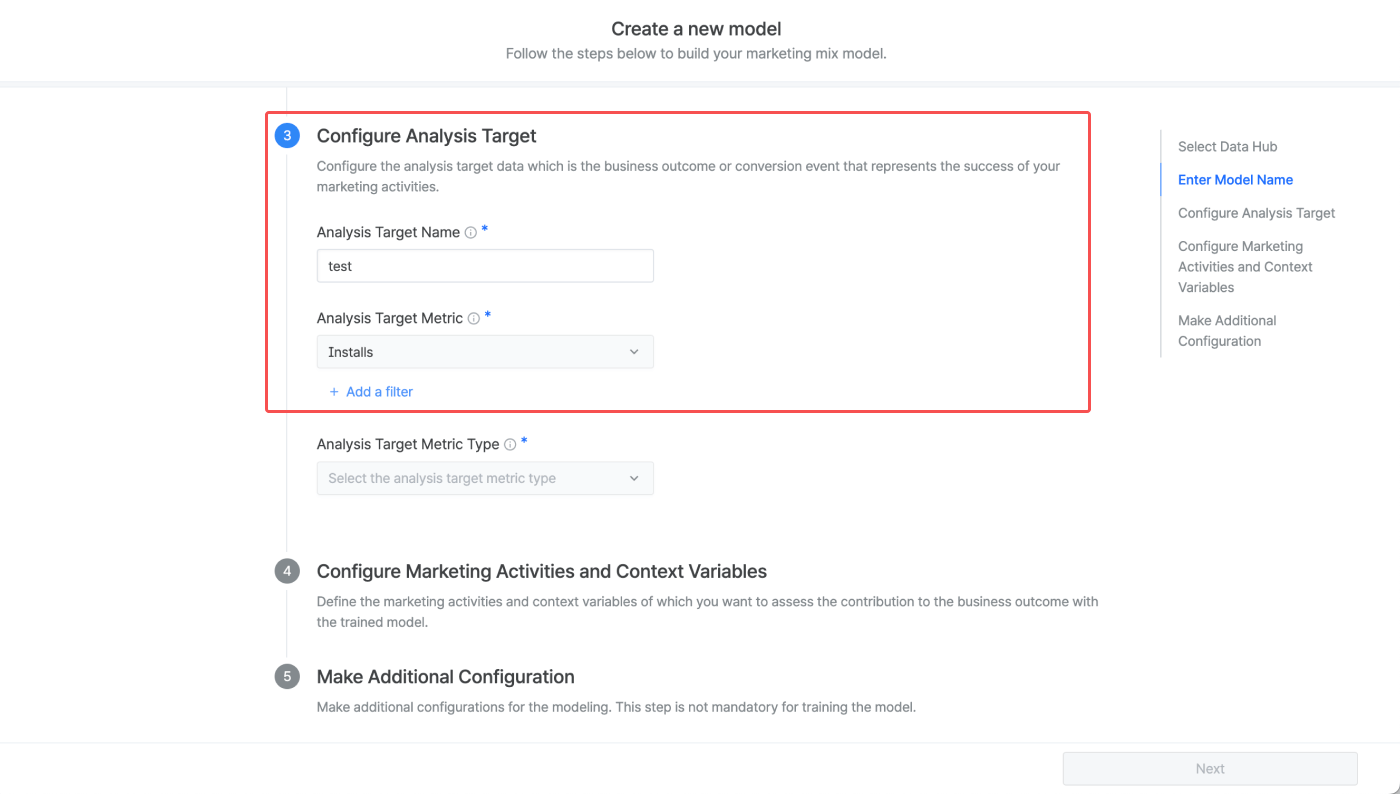
Use case 1: Configuring the analysis target as the in-app purchase amount of your iOS app generated in the US
Use case 1: Configuring the analysis target as the in-app purchase amount of your iOS app generated in the US
To configure the analysis target as the in-app purchase amount of your iOS app generated in the US, follow the steps below:
- Select Revenue as the analysis target metric.
- Add a filter, select Platform, and select iOS as the platform.
- Add another filter, select Country, and select US as the country code.
Use case 2: Configuring the analysis target as the app install generated through user acquisition campaigns
Use case 2: Configuring the analysis target as the app install generated through user acquisition campaigns
To configure the analysis target as the app install generated through user acquisition campaigns, follow the steps below:
- Select Installs as the analysis target metric.
- Add a filter, select Custom 1, and select UA.
- Select the analysis target metric type. The model’s training approach depends on the chosen metric type.
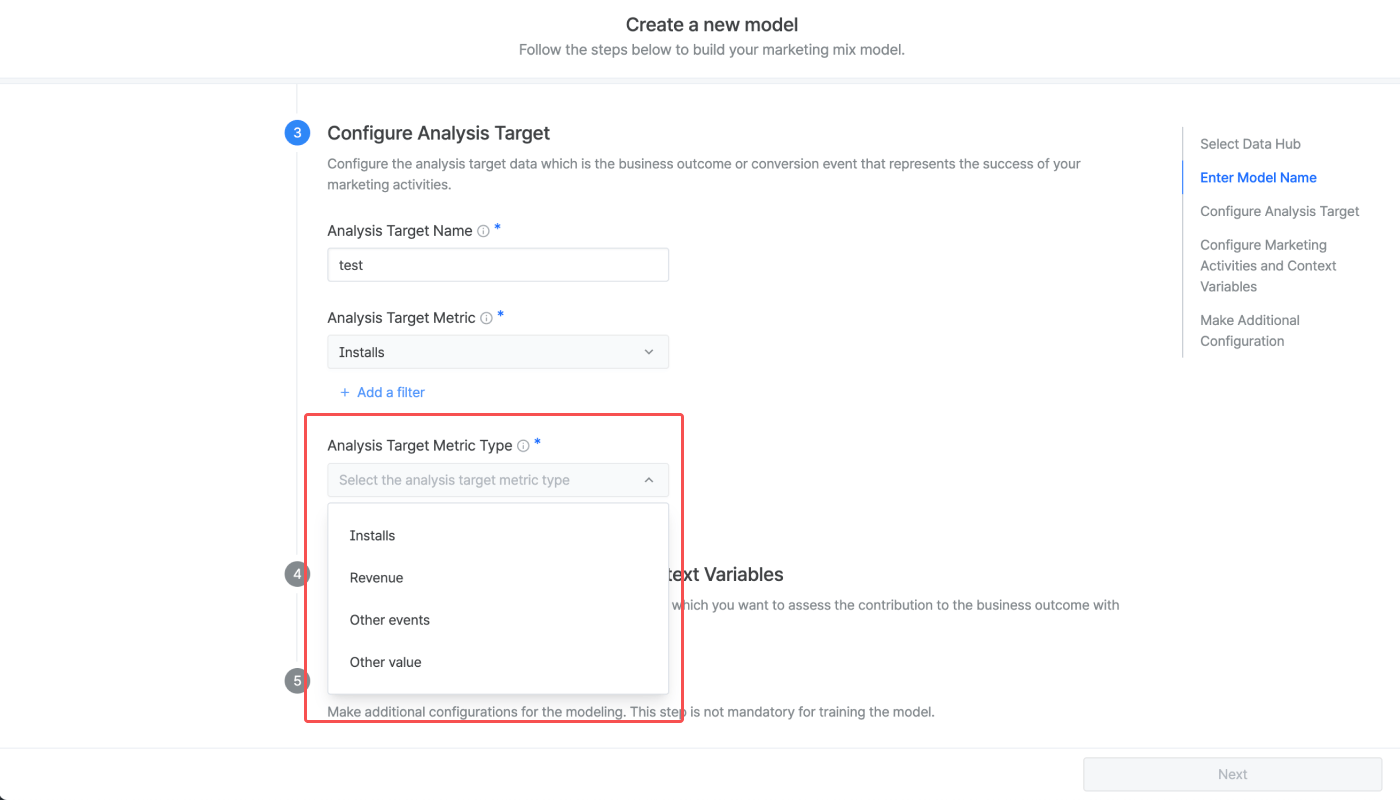
Analysis target metric types supported
Analysis target metric types supported
The model’s training approach depends on the chosen metric type. Select the metric type that best suits your analysis needs.
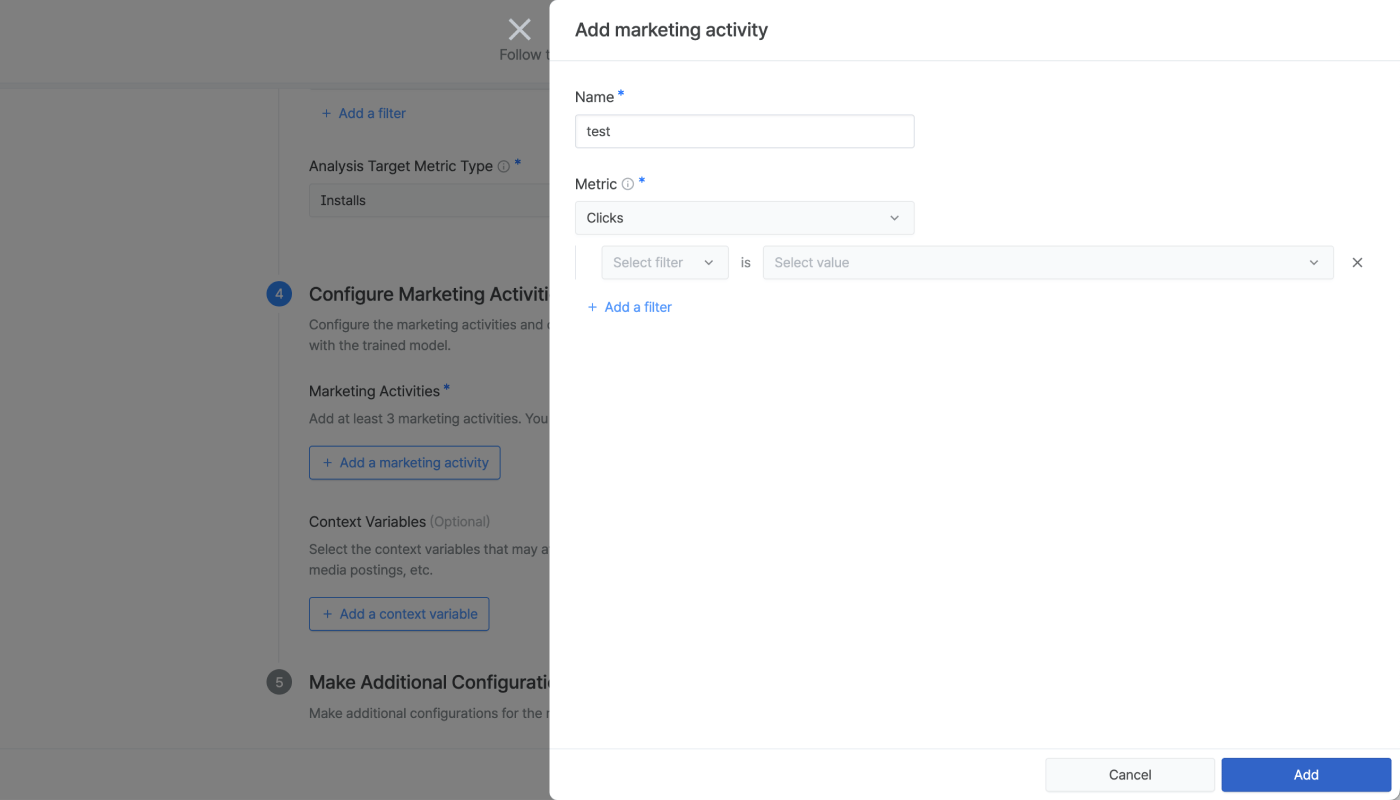
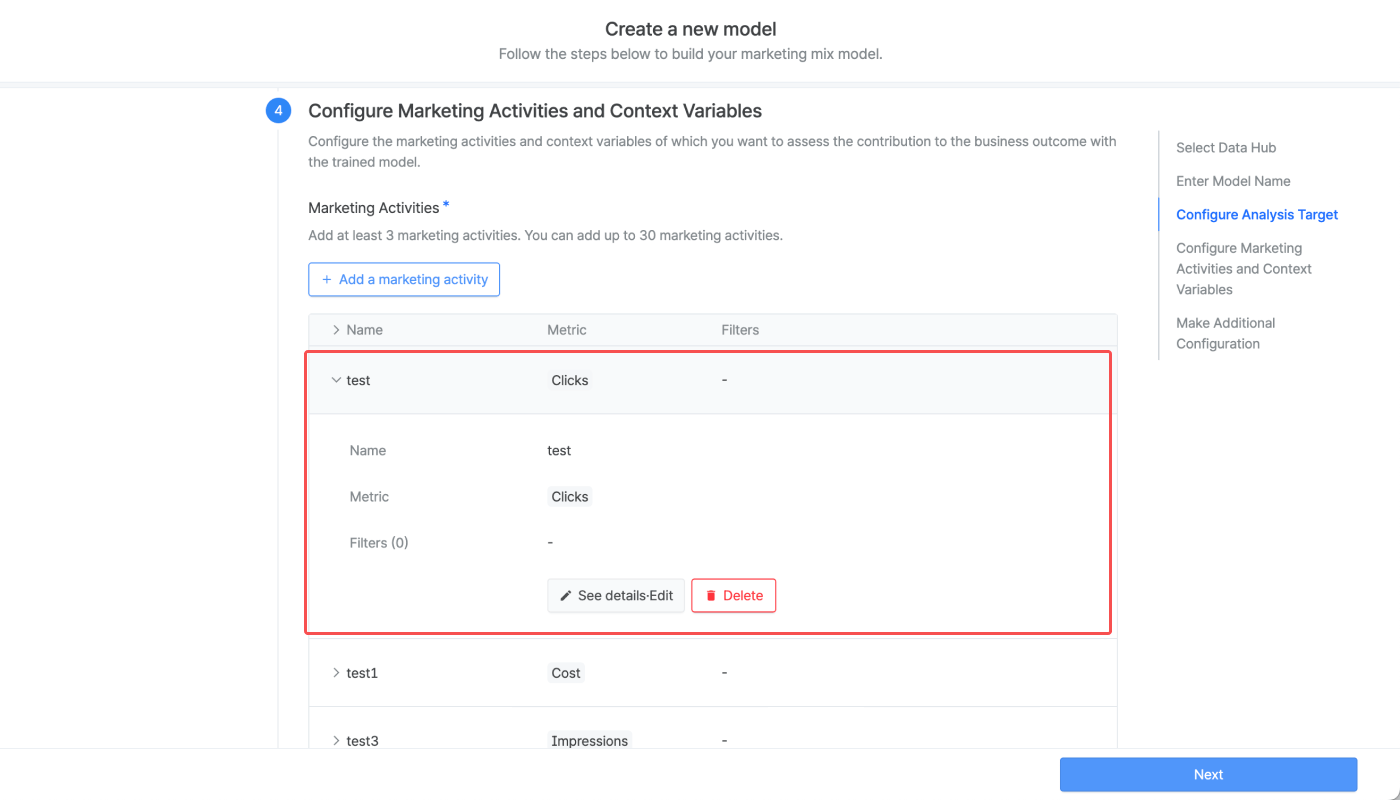
- Click Add a marketing activity. At least 3 marketing activities must be added.
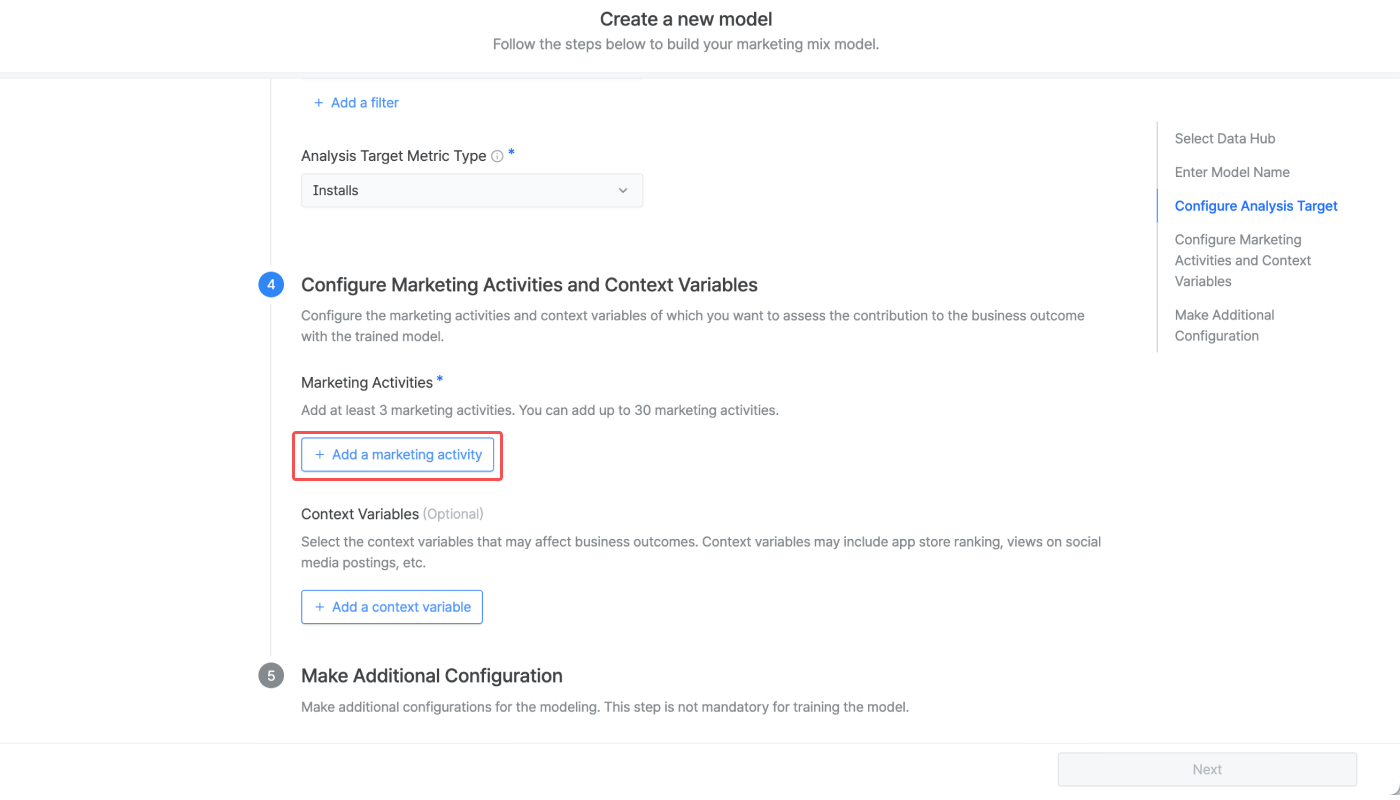
- Enter the marketing activity name. The name must be less than 32 characters. Then, Select the marketing activity metric from the metrics saved in your selected data hub. Click Add a filter to specify the metric. Multiple filters and filter values can be added.
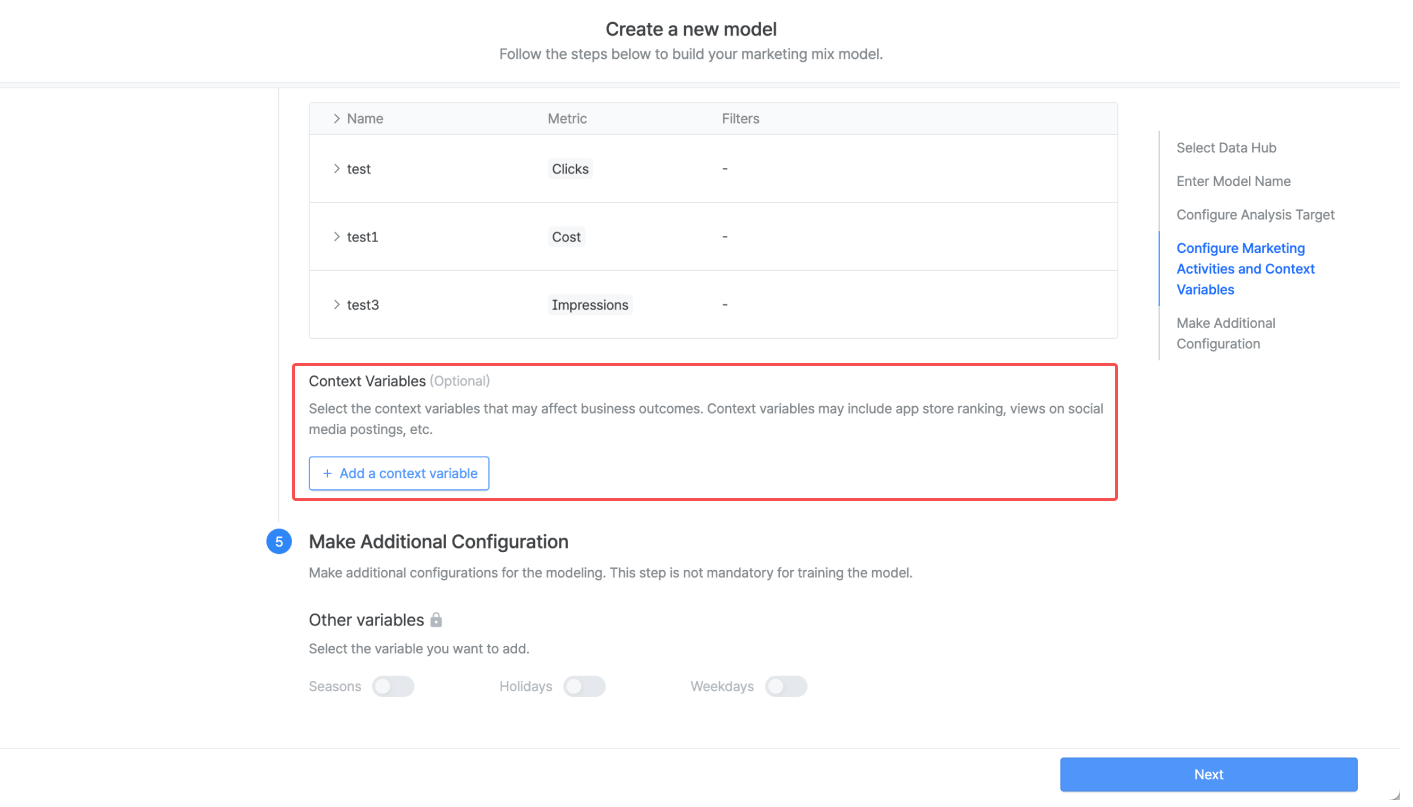
- Configuring the context variable is optional. The process of configuring the context variable is the same as configuring the marketing activities.
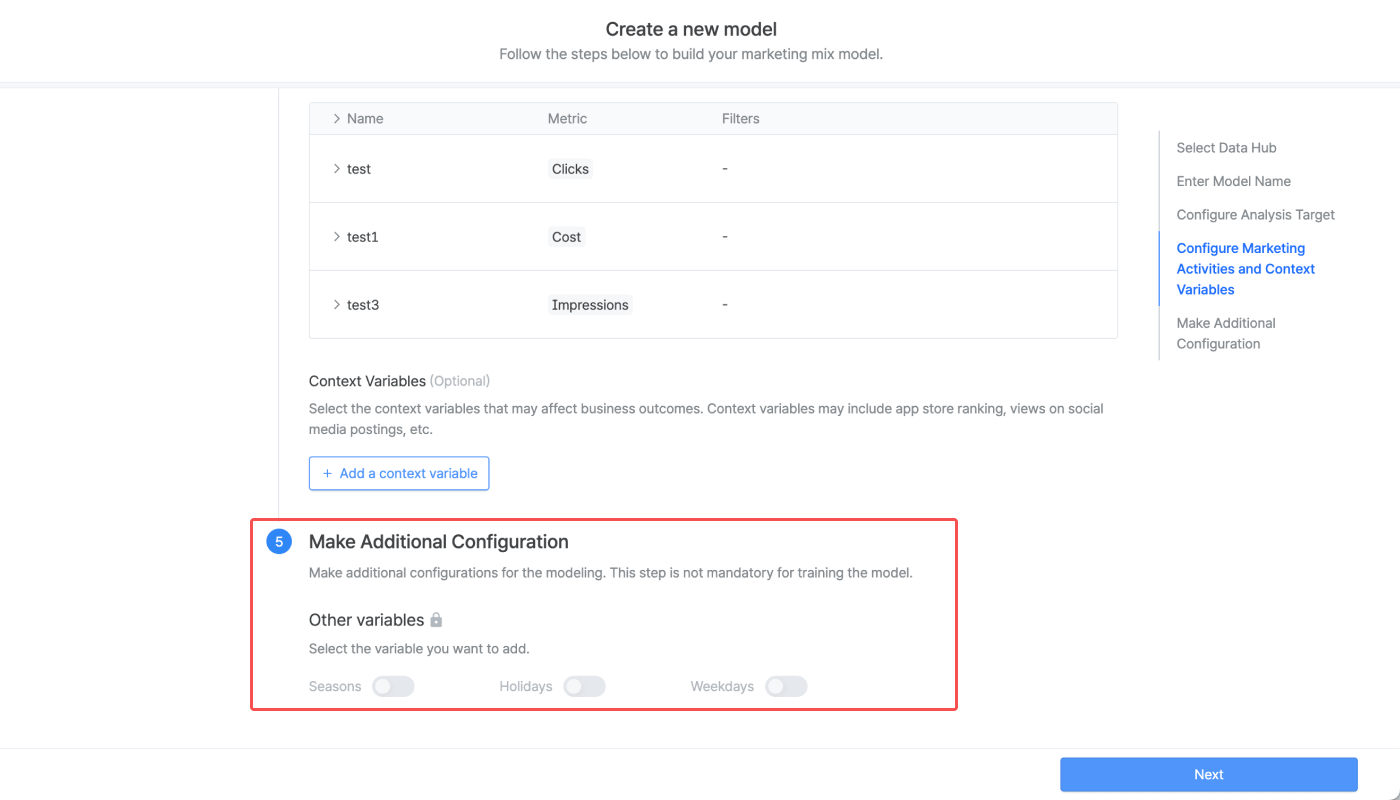
- To increase the accuracy of the model, you can make additional configurations where you can add other variables such as seasonality. This configuration is optional and will be made available soon.
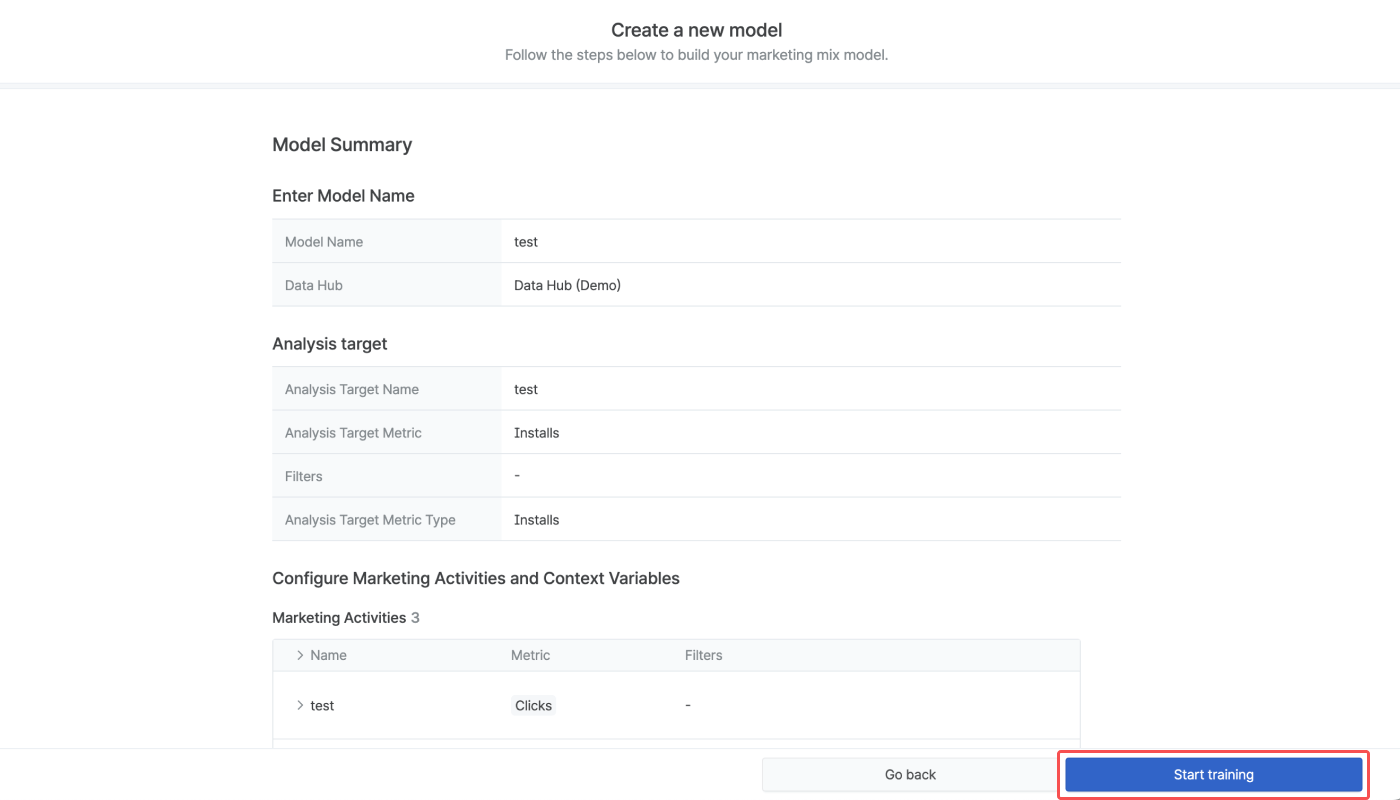
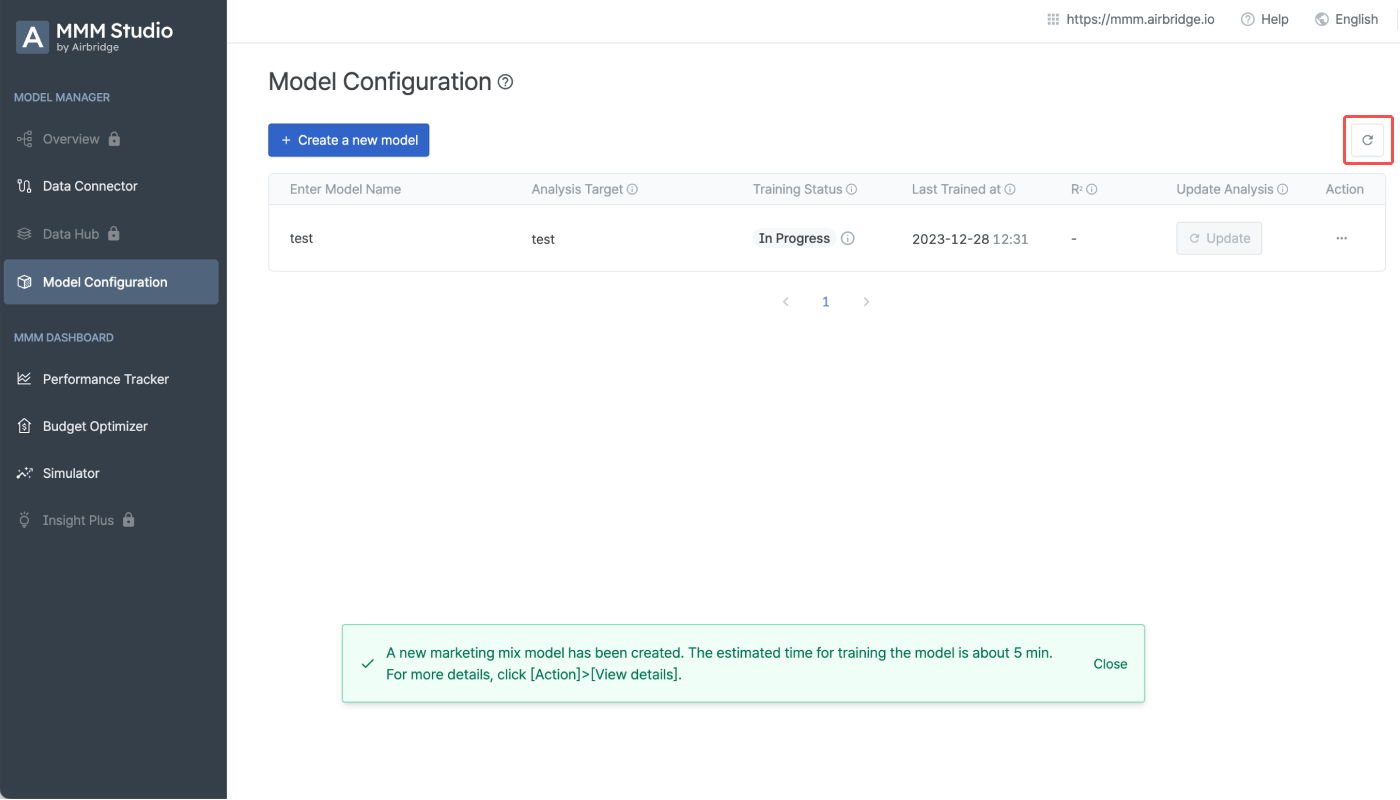
- On the Model Summary page, you can review the configurations made for your model. Click Start training if everything is in order. A notification box that appears at the bottom will let you know the estimated time it will take to train the model. If the Training Status of the model won’t change to Success even after the estimated time has passed, click the [refresh] icon on the upper right.
Making Use of the Marketing Mix Models
Models that completed training can be used for different purposes. The following table shows the options you can select from the [Action] feature.Marketing Mix Model Management
Training status
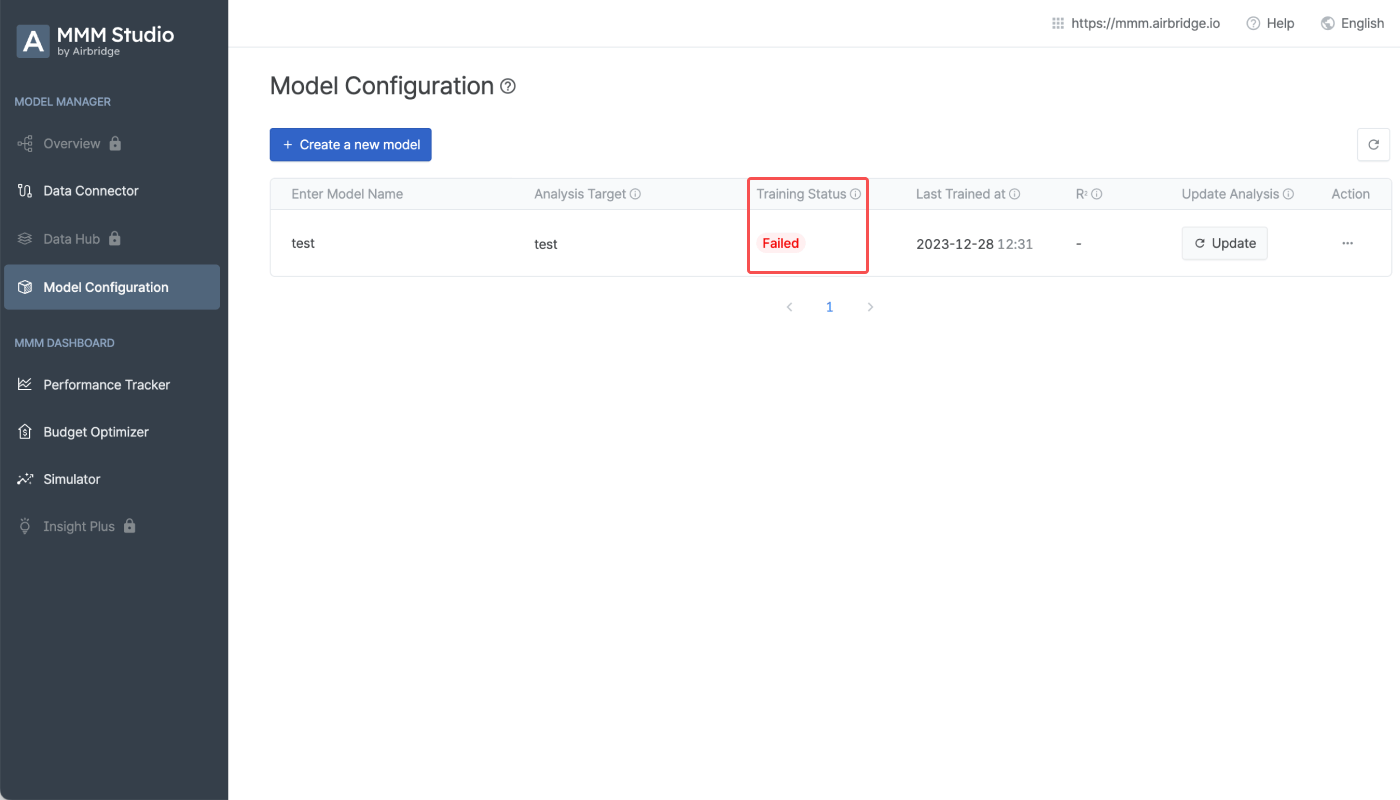
The Training Status column shows the status of your model. The marketing mix model can’t be used for creating reports until the training is complete.Training status
Training status
Update analysis
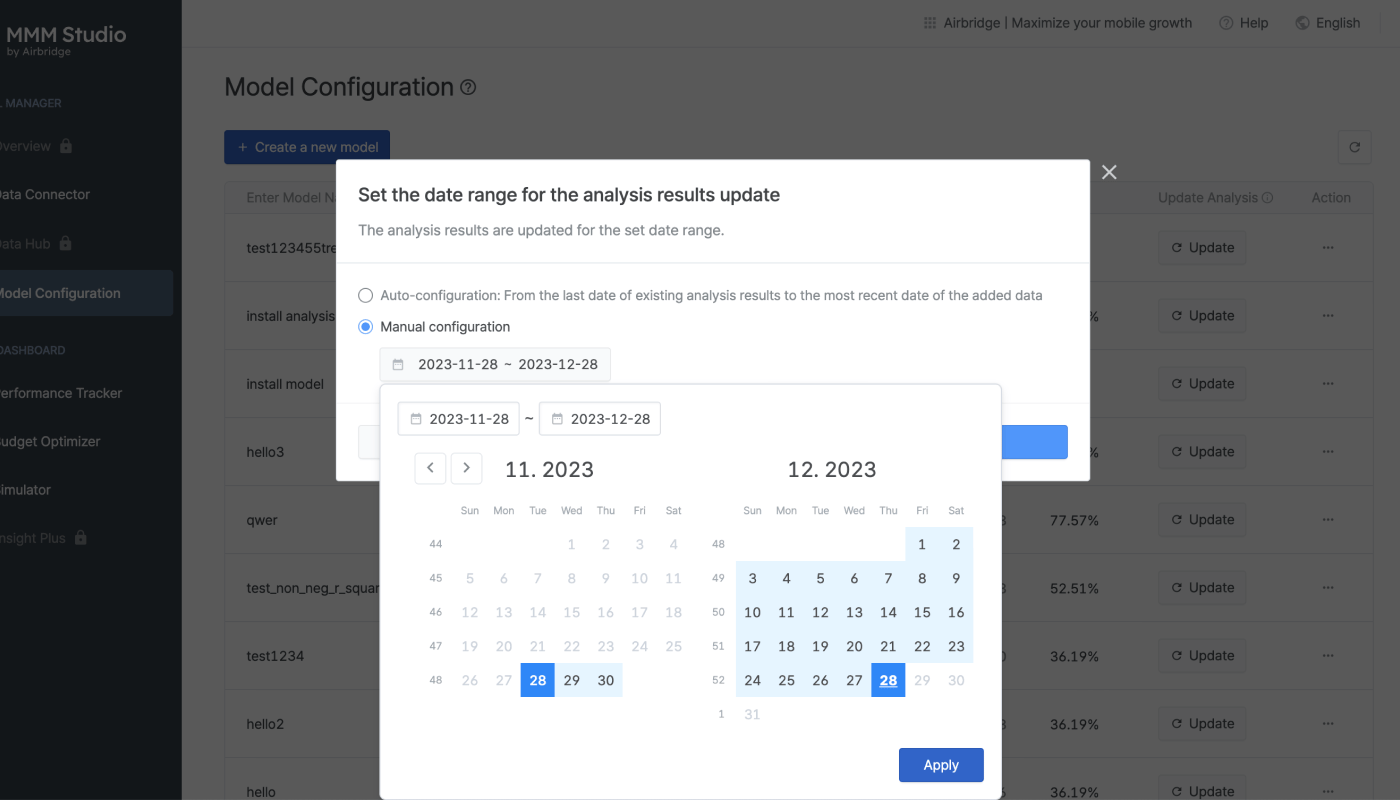
If you want to update the model with the most recent training results, click Update in the Update Analysis column.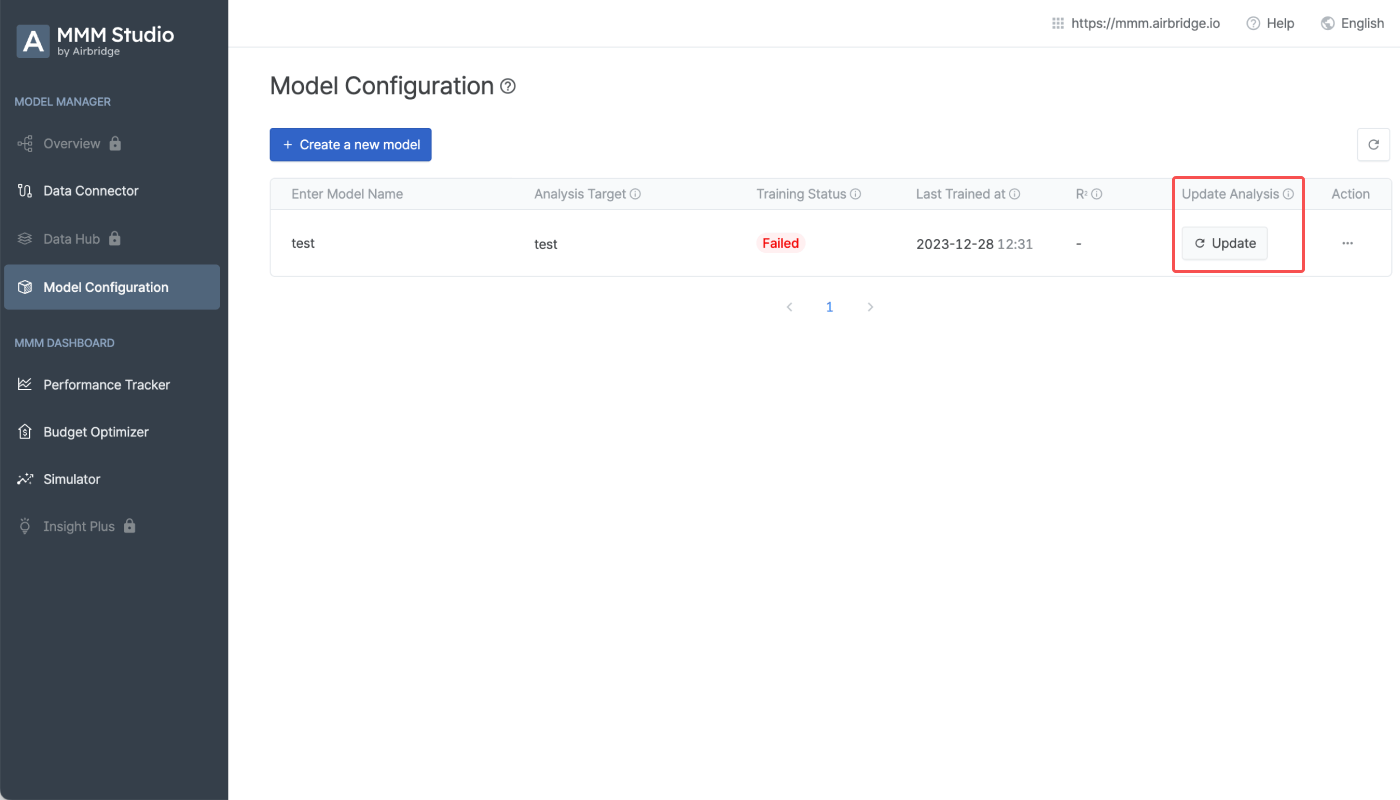
- Auto-configuration: The date range is automatically configured for training, which is from the last date of existing analysis results to the most recent date of the added data
- Manual configuration: You can specify the date range for the training.